Aesthetic and embodied learning for democracy

Welcome to the AECED Project Website

Democracy isn’t simply a technical process that involves you learning about its history, principles, rules and institutions. Democracy is a way of governing and a way of relating to each other that is a here-and-now experience.

This understanding sits at the heart of our work and the resources we are developing to support education for democracy in practice through integrating aesthetic and embodied approaches. 
 

Starting your journey

Find approaches and pathways to support a stronger, more lived connection to democracy

What is AELD

Explore the key ideas and principles behind AELD and how it supports education for democracy

Putting AELD into action

Access research informed resources to experiment with and explore AELD in your own setting

Policy implications

Consider how ALED can be supported in learning environments, organisations and policy systems

About the AECED project

Learn more about the 3-year Horizon Europe and UKRI-funded project

Project blog

Engage with blogs written by AECED project members over the lifespan of the project

“This activity was genuinely welcomed as a rare and valuable pause – a moment to stop, read and think about my practice through a different lens. Too often, ‘practice’ becomes synonymous with writing yet another email, setting up yet another meeting, or filling out yet another form.”

UK HE trailblazer

“This training material is valuable for self-reflection and professional growth. It encourages teachers to think through the situation and decide for themselves how they would respond before showing which reaction is considered most appropriate from the perspective of responsive pedagogy.”

Latvia secondary trailblazer

“The Acceptive Gaze is embedded in a clear pedagogical know-how. It is not presented merely as a slogan, such as ‘You should first accept yourself and your students’, which may sound more like a mantra than a practical approach. The essential question is how this can actually be achieved.”

Latvia secondary trailblazer

“This embodied approach allowed participants not only cognitive but also embodied reflection through different patterns. Each person selected two cards: one representing their wishes for the group and one representing their self-bringing. This visual and physical exercise successfully grounded individual expectations in a collective framework.”

Germany APOL trailblazer

“The drawing perception exercise worked surprisingly well in the online class. The course is very interactive, and students are used to participating and discussing, but the drawing element introduced new dimensions to the usual discussions and participation. Drawing concepts helped them to understand central concepts in totally new ways.”

Finland HE trailblazer

“By using art cards and pictures, students noticed there are many ways to see and speak about different phenomena. This reinforced the idea of an acceptive gaze. In addition, it increased understanding of different kinds of knowledge and interpretations.”

Finland HE trailblazer

“As a teacher, it has been very important to get to know the new pedagogical orientation. It has helped me to reflect on and evaluate my own thinking about teaching, my practice and my methods. In addition, the short activities have been very inspiring, and they have motivated me to create different ways to use them.”

Finland HE trailblazer

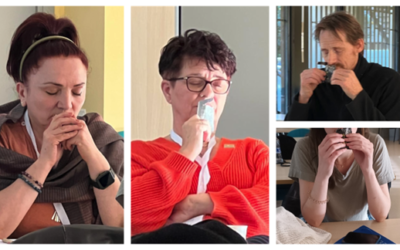
“The activities worked very well as a way of attuning to one another and to the themes of presence and listening that we were exploring. They also supported a holistic awareness of what is happening within one’s own body and mind as part of the group.”

Finland HE trailblazer

“I feel it is important to avoid applying functional methods superficially. Many of the functional methods introduced in the AECED project were highly suitable for my purpose. It was easy to choose a ‘light’ method that felt appropriate both for myself and for the group, and whose intended use clearly aligned with the context.”

Finland APOL trailblazer

“I plan to further integrate the AECED resources into teaching through workshops and activities that foster critical thinking. I also see potential for their application in cross-curricular topics and projects, as well as in collaboration with colleagues through the exchange of good practices and professional development.”

Croatia secondary trailblazer

“Pupils and students engaged willingly and actively participated in the workshops, critically reflected on their surroundings, and suggested changes and improvements. Most useful were the concrete suggestions for activities and workshops, which could be easily adapted to the teaching context. The structure of the Framework supported the planning and organisation of activities.”

Croatia secondary trailblazer

“I was motivated by supporting students’ emotional expression and reflection. I use similar activities, but I wanted to become more intentional in connecting them with democratic values such as voice, participation and respect for different perspectives. Most useful was understanding that democracy develops through everyday classroom interactions and routines.”

Croatia primary trailblazer

“The activity helped students express their feelings more openly and listen to each other more attentively. I noticed increased empathy, better relationships, and a stronger sense of community in the classroom. It motivated me to practise differentiation and give students different ways to express themselves, because usually they all do the same activity.”

Croatia primary trailblazer

“Ensuring that all students participate equally and that some students do not dominate the discussion is challenging. It requires time and patience to create a safe and supportive environment. Some students need more support to express their ideas or reflect on the future. It is important to create enough time and a safe atmosphere so that all students feel comfortable sharing.”

Croatia primary trailblazer

“I plan to continue using these practices regularly, especially as part of daily routines such as morning meetings or class discussions, in order to support students’ social and emotional development. Small everyday activities can have a big impact on classroom relationships, and I liked hearing what others want for their future.”

Croatia primary trailblazer

“The materials resonate strongly with practices already grounded in participation and inclusion, reinforcing the importance of empathy, dialogue and embodied expression in democratic learning. The approach is meaningful and applicable, but requires time for collective reflection and institutional support to be effectively integrated into school practices.”

Portugal deliberative dialogue participants

“The focus on inclusion, diversity and neurodivergence is highly relevant, though adaptations are needed to address different developmental stages within the same educational cycle. Practical and visual tools make the framework accessible. There is strong motivation to adopt these materials, especially where democratic values and aesthetic learning are already part of the school culture.”

Portugal deliberative dialogue participants

“In my context, these resources can support students and professionals working with youth in CSOs, education, social services and civil society. They can be used in training, programme development and reflective practice with students related to democratic participation and inclusion. The Framework integrates democratic values and theoretical principles with practical tools and guidance.”

Croatia HE guide champion

“The Framework clearly defines core democratic values — freedom, equality and equity, and responsiveness — and connects them with concrete pedagogical practices. The Guide emphasises that democracy in education is not only taught as content but lived through relationships, participation and co-creation of meaning, with a particular focus on the aesthetic and embodied dimensions of learning.”

Croatia HE guide champion

“In my institution in higher education, the resources can be used to shape participatory and reflective teaching practices, facilitate dialogue and collaborative learning, integrate aesthetic and embodied methods into curricula and teaching, and develop democratic sensibility in everyday academic practice.”

Croatia HE guide champion

Webinar Launch Announcement

Webinar Launch Announcement

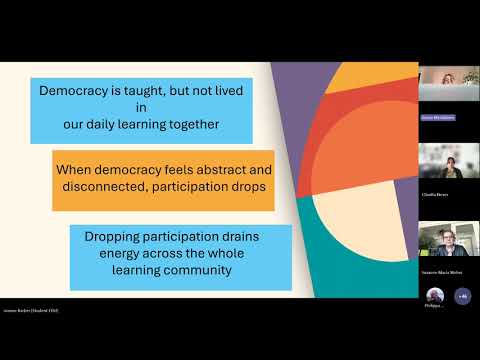
Embodying Democracy: A Framework for Aesthetic and Embodied Learning for Democracy  We are pleased to share that the AECED project will be hosting a free online launch webinar to introduce our newly...

Sensing democracy-as-becoming

Sensing democracy-as-becoming

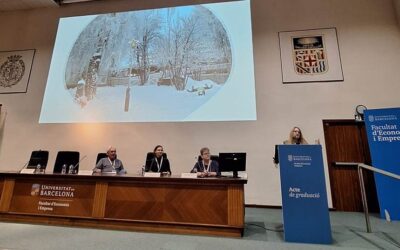
On 21 November 2025, AECED team members, Karine Oganisjana (Latvia), Kardelen Dilara Cazgir (Germany), Uldis Dumins (Latvia) and Sandra Wallenius-Korkalo (Finland), delivered an interactive...
Brand Name
RIGA University
Marburg Logo
Zagreb Logo
Aberta Logo
Herts Logo